Horticulture with

20% Higher Crop Yields
Research at Temasek Polytechnic
The study, under controlled environment by Centre for Research and Opportunities in Plant Science, Temasek Polytechnic, shows that with the use of mGRO yields 20% more crops.
LiGrA Experiment
| Control A | Control B | T1 | T2 | |
|---|---|---|---|---|
| Mean | 36.54 ± 3.06 | 53.56 ± 2.58 | 60.95 ± 3.25 | 64.14 ± 3.73 |
| % of Control A | – | 14.1 | 29.8 | 37.1 |
| % of Control B | – | – | 13.8 | 20.1 |

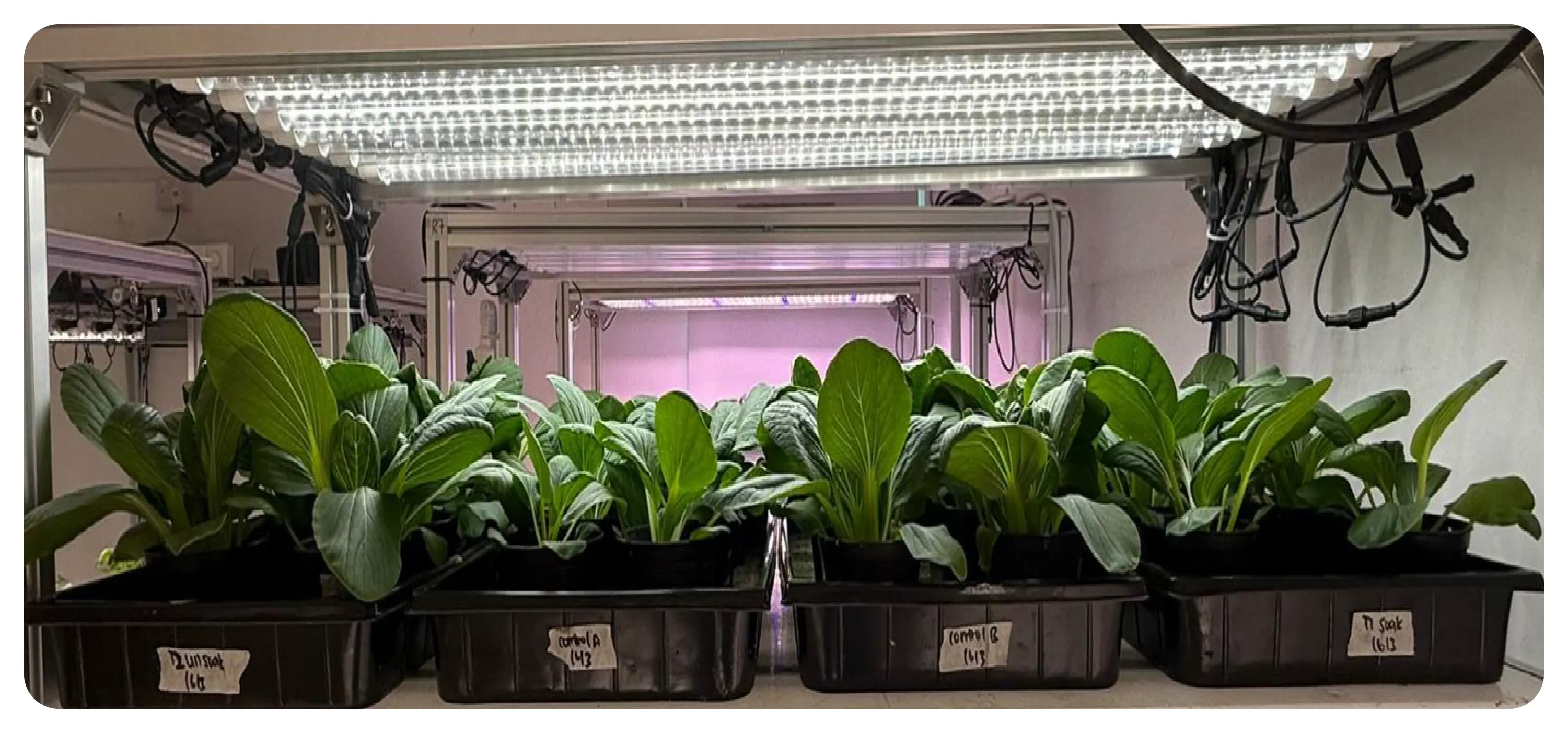
Both T2 and Control B contain bio-organisms, allowing for a fair assessment of the growth impact from LiGrA in T2.

When T2 is compared with Control A, which contains no bio-organisms, it shows that adding bio-organisms and LiGrA yields 37% more crops.
Featured in
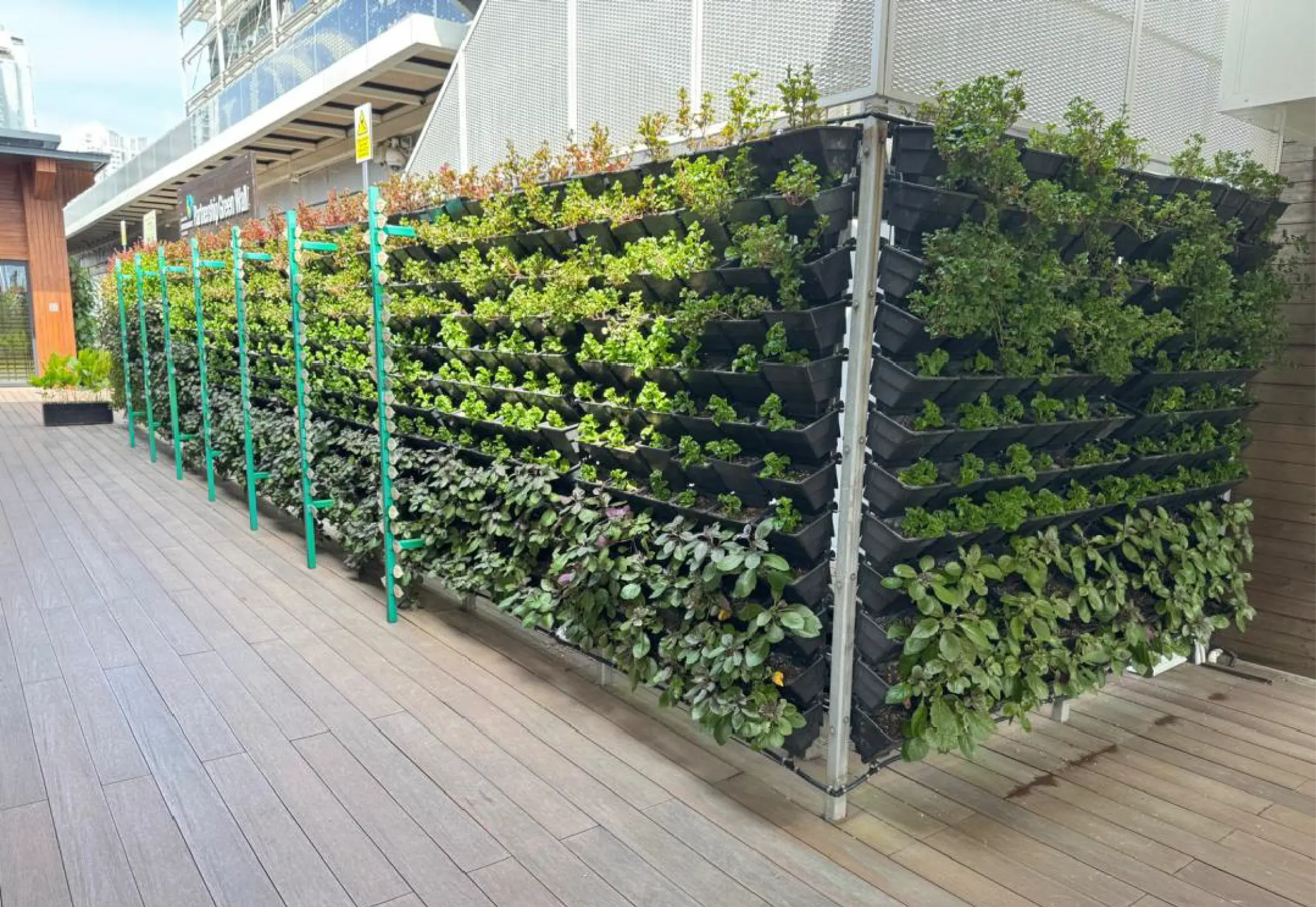
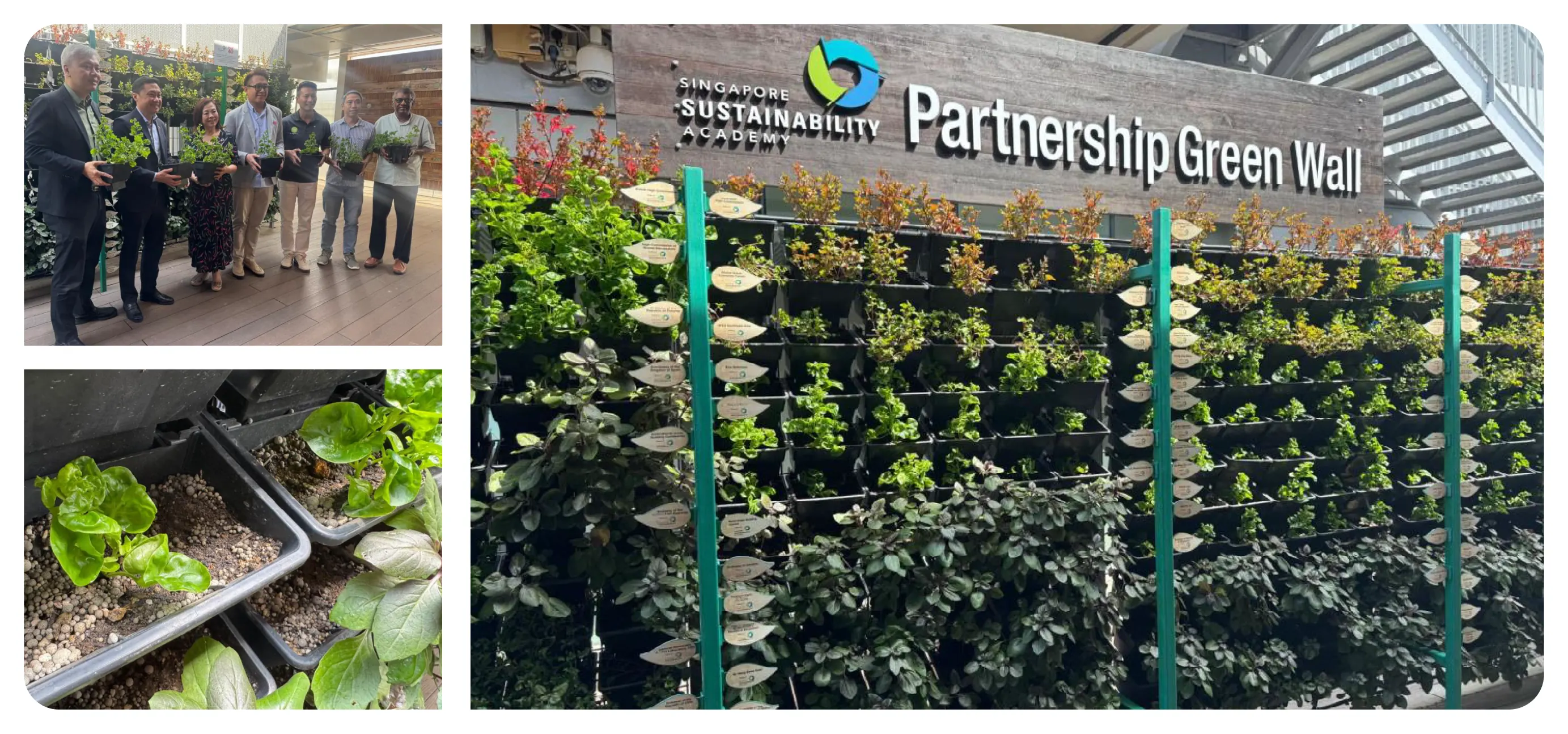
Singapore Sustainability Academy’s Edible Green Wall
Launched by the Singapore Sustainability Academy, the Edible Green Wall utilizes potting soil combined with LiGrA as the growth medium for plants.
Benefit of using mGRO
Enhances soil structure by improving aeration, drainage, and resistance to compaction. This creates a healthier root environment, allowing plants to establish stronger roots and thrive with improved water and air balance.
Structural Advantages

Lower Load on Green Wall
The composite significantly reduces the weight on the green wall structure.

Increased Space Efficiency
Allows for greater use of vertical space.

Easier Handling
Simplifies maintenance & installation processes.

Proven in Taman Damai Communal Garden
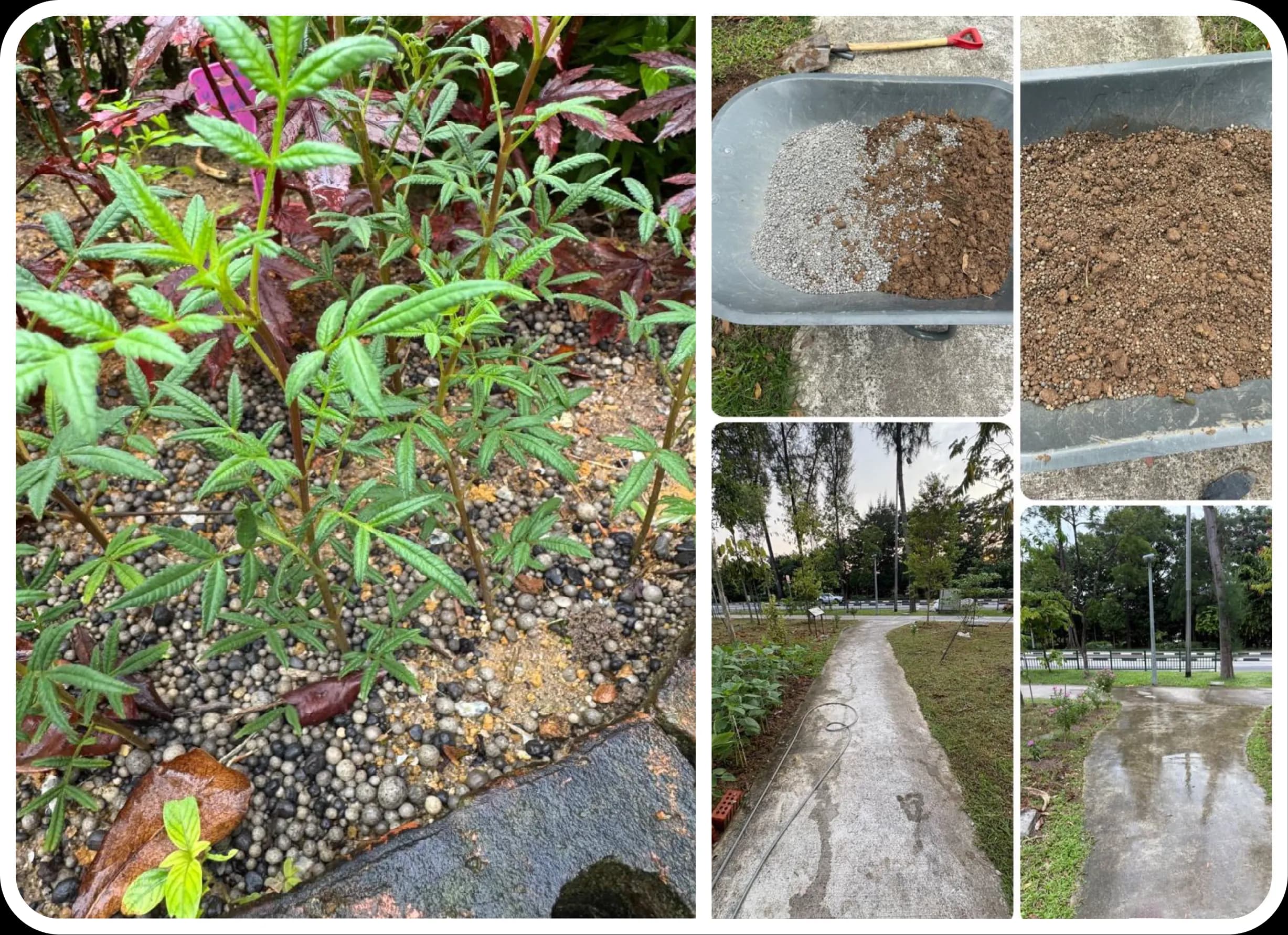
The approach of combining mGRO with soil has been successfully tested at a Communal Garden in Taman Damai, located within the HDB estate at Yuan Ching Road.
A 40% mGRO : 60% soil mixture was used to reduce the stickiness of the clayey soil while maintaining favourable conditions for plant growth.
Healthy Seed Germination
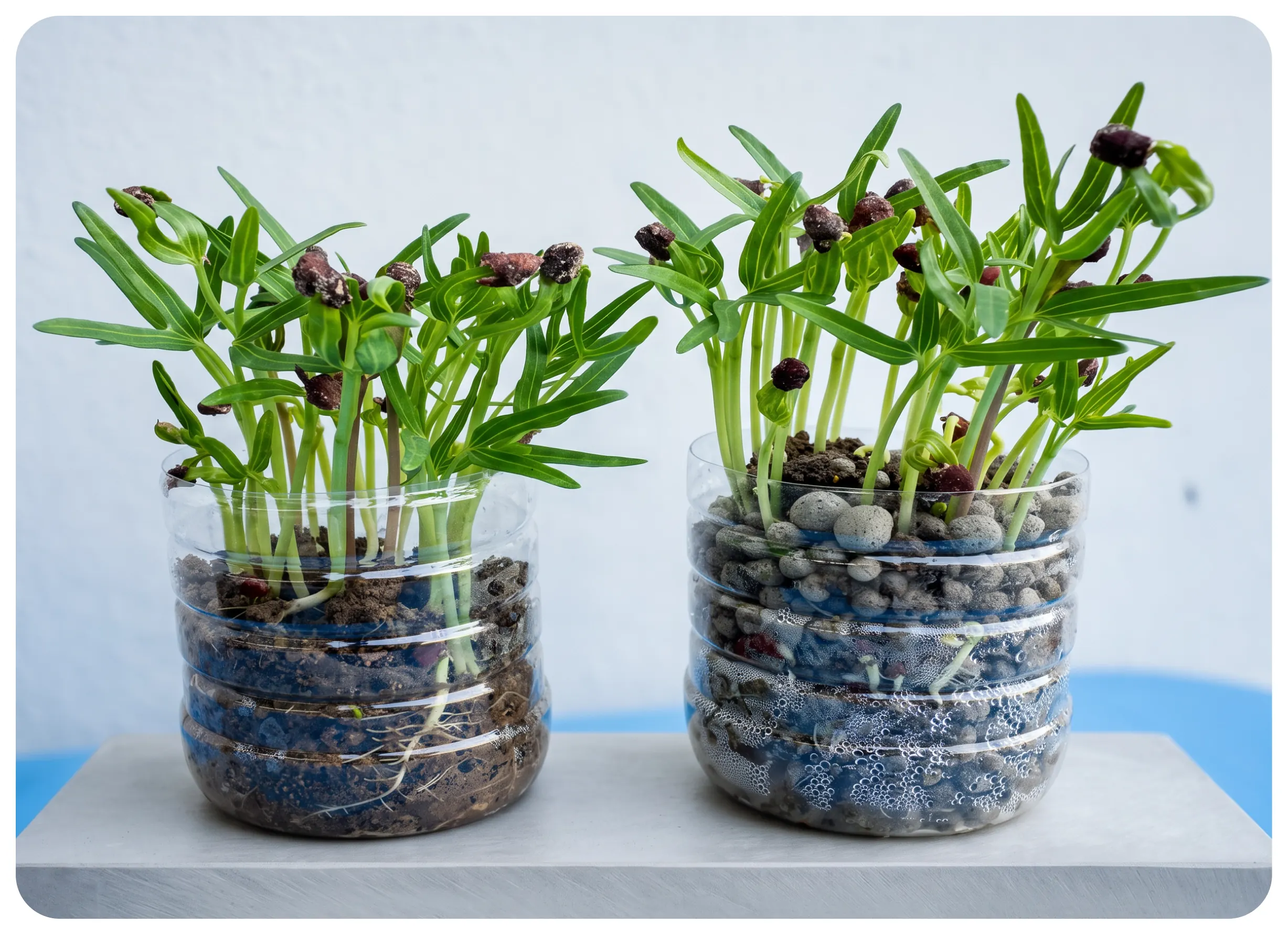
Kang Kong seeds were grown in two different growing media: 100% soil and a 50:50 mGRO-soil blend (by volume). Both media produced healthy shoots within 5 days, while the mGRO composite weighed only 55% as much as soil, creating a significantly lighter growing medium.
These promising results support the continued exploration of mGRO as a sustainable solution for horticultural applications.